
Solidarity does not begin when we arrive with something in our hands. It begins earlier, when we accept that we do not already know what is needed.
The visit to Lake Turkana left us with this above all: not the feeling that we had “helped” someone, but the awareness that we had been welcomed into a relationship. Not as saviours. Not as people who came to serve. Not as representatives of a more developed world. Simply as people, standing in front of other people.
In every true encounter, something similar happens: you bring something, but you also receive something you did not have before. A different way of seeing, a new question, a more precise understanding of what it means to live in a place.
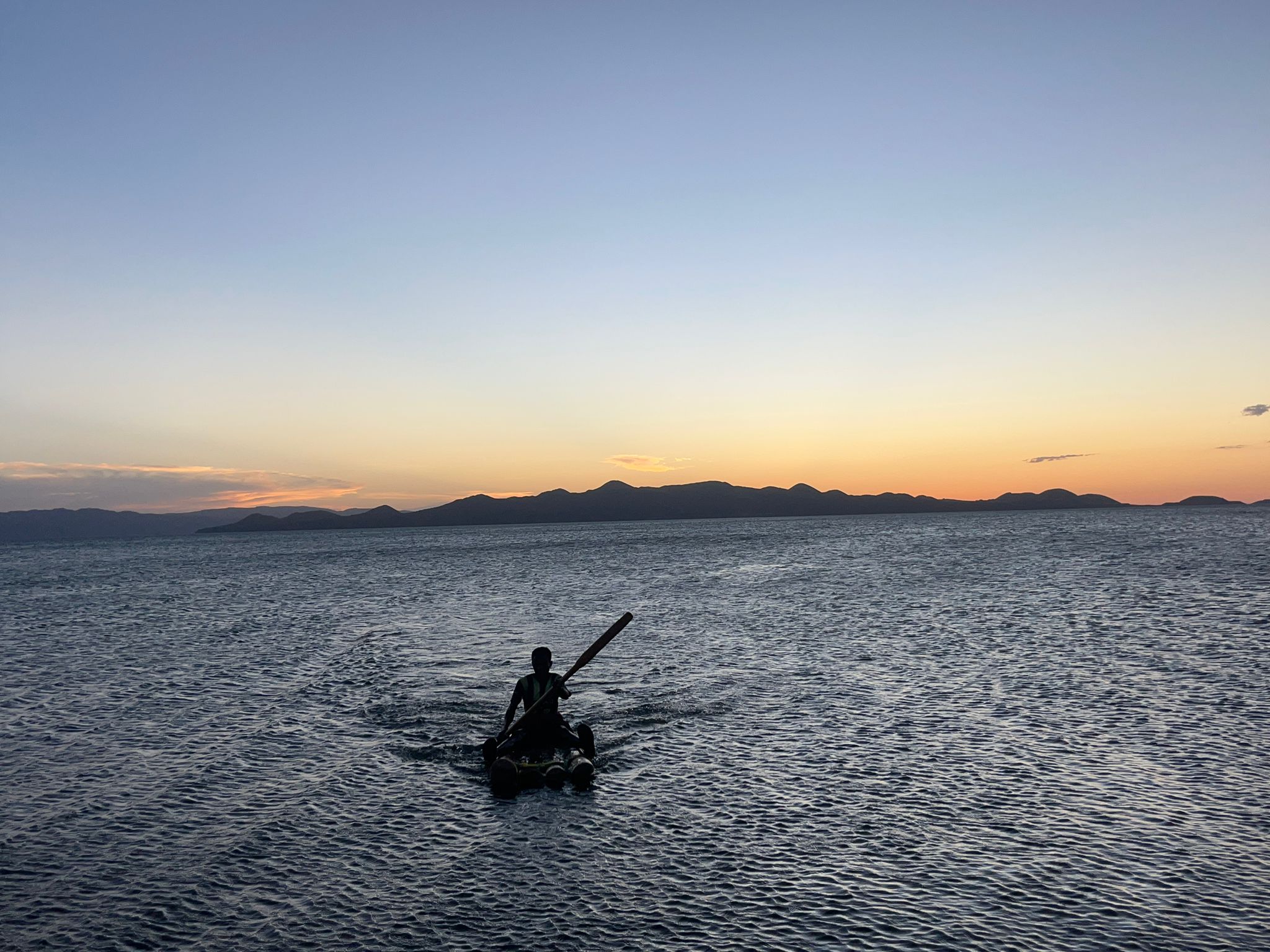
Loiyangalani
Lake Turkana, in northern Kenya, is often called the Jade Sea because of the colour of its waters. It is the world’s largest permanent desert lake, set in an arid and remote region shaped by wind, distance and a beauty that is not domesticated. Around Loiyangalani, different communities live side by side: El Molo, Turkana, Samburu, Rendille, Gabra, Borana and Waata, together with other groups that have crossed, inhabited and narrated this territory for generations.
This diversity is not folklore. It is history, economy, language, kinship and adaptation. Some communities are closely tied to pastoralism and seasonal movement; others, like the El Molo, have built a deep relationship with the lake and with fishing. In a place where fresh water is rare, where the climate imposes harsh limits and where resources shift with the seasons, every form of life requires exact knowledge: how to read the wind, recognise currents, decide when to go out by boat, repair a net, and divide what arrives.
A request, not a list
We went there with friends from Strathmore University to bring clothes and shoes to a small El Molo-Turkana community we had already met a few weeks earlier, when Father Musau had brought school materials for the children.
When we arrived, the community leader greeted us jokingly:
“This is not Kenya.”
And, in a way, he was right.
Not because Lake Turkana is outside Kenya, but because it unsettles the easy categories through which a country is often imagined. It is not Nairobi, not Maralal, not the postcard savannah, not the abstract “poverty” described from far away. It is a specific world, with its own rules, memories, fragilities and forms of dignity.
After receiving the bags, the elders sat together and discussed how to divide everything. Not randomly. Not with the urgency to take as much as possible. They considered who needed more, fully aware that these donations would not change everyone’s life. Precisely for that reason, they had to be distributed carefully.
That scene said more than any speech could have. It showed a community that knows itself, that can distinguish between need and desire, that does not lose its sense of proportion even when receiving something from outside.
Later, we spent the night listening to the community leader’s stories about the lake, the origins of the community and the daily life of fishing families. Fishing was not described as a simple economic activity, but as a way of being in the world: the knowledge of nets, boats, winds, fish, inherited stories and new difficulties.
When we asked him what he would wish for, his answer was simple:
“A boat and a better fishing net.”
Not an endless list. Not a request designed to impress. A concrete answer, proportionate to the real life of the community.
For us, it was a fundamental reminder: listening means allowing others to name their own needs. It means not replacing their voice with our idea of help. It means not romanticising poverty, not turning communities into images, not deciding from far away what the solution should be.
Solidarity begins here: meeting, listening, learning, and only then asking how to contribute.
Asante.